Views: 0 Author: Site Editor Publish Time: 2026-07-28 Origin: Site
Designing flexible packaging that must withstand aggressive mechanical stress, temperature extremes, or sharp contents without failing presents a strict engineering challenge. When a pouch ruptures during distribution or a seal fails in a freezer, it leads to compromised product safety and extensive material waste. Biaxially oriented polyamide, commonly known as nylon, offers exceptional puncture and flex-crack resistance to address these physical demands. However, its performance is entirely dependent on the lamination structure. Selecting the wrong complementary layers or adhesives leads to delamination, curling, or barrier failure due to moisture absorption.
This is where Flexible Packaging BOPA Film becomes essential. As a premium high-performance material, it requires precise engineering integration with sealant and barrier webs to unlock its full potential. This article provides a technical framework for evaluating and selecting the optimal multi-layer lamination structures for specific end-use applications, balancing performance, machinability, and structural integrity.
Structure Dictates Performance: Two-ply structures (BOPA/PE) are sufficient for standard vacuum packaging, while three-ply structures (PET/BOPA/CPP) are mandatory for high-temperature retort applications.
Moisture Management is Critical: Because nylon is highly hygroscopic, lamination structures must often position moisture-barrier films (like PET or PE) strategically to protect the BOPA layer and maintain dimensional stability.
Stretching Orientation Impacts Stability: Understanding the differences between simultaneous and sequential stretching of BOPA is critical for preventing packaging distortion and bowing.
Adhesive Selection Matters: The choice between solvent-based, solventless, and extrusion lamination directly impacts the bond strength and suitability for aggressive contents (e.g., acidic or oily foods).
Application-Driven Design: The optimal structure requires a strict evaluation of the product’s lifecycle, including filling temperatures, distribution hazards, and required shelf life.
High-stress packaging environments demand materials that survive extreme conditions. Frozen foods, bulk liquids, and sharp-edged products routinely compromise standard packaging films. These applications require high tensile strength and the ability to absorb impact without rupturing. A baseline requirement for these environments is a material that resists flex-cracking during transit while maintaining hermetic seals. When you are running a form-fill-seal line at 120 pouches per minute, the web must handle the tension without stretching out of registration.
Biaxially oriented polyamide delivers specific mechanical properties that make it indispensable on the production floor. It provides immense tensile strength, allowing pouches to hold heavy volumes without stretching. The material offers superior puncture resistance against sharp bone-in meats or rigid dry goods. Furthermore, it exhibits excellent flex-crack resistance, ensuring the package remains intact during extensive handling and vibration in transit. It also functions as a highly effective gas barrier, extending product shelf life by keeping oxygen out of the package.
Standard gauge offerings for this material typically include 12, 15, and 25 microns. The thickness directly correlates with puncture resistance and overall durability. Thicker gauges provide robust protection for heavy-duty applications, while thinner gauges suit lighter, standard vacuum pouches. You have to match the gauge to the drop-test requirements of the final product.
BOPA Gauge (Microns) | Typical Application | Puncture Resistance Level | Flex-Crack Resistance |
|---|---|---|---|
12µm | Standard vacuum pouches, processed meats | Moderate | High |
15µm | Frozen foods, standard liquid pouches | High | Very High |
25µm | Heavy-duty bulk liquids, bone-in meats | Extreme | Maximum |
The moisture dilemma remains a critical factor in structural design. Nylon is highly hygroscopic. Under high relative humidity (RH), its gas barrier degrades significantly. Comparing the Oxygen Transmission Rate (OTR) at 0% RH versus 90% RH reveals a drastic drop in barrier performance. This physical reality demonstrates the absolute necessity of integrating moisture-barrier co-layers into the final structure to protect the nylon core.
You cannot use BOPA FILM as a standalone packaging web. It lacks heat sealability, making it impossible to form pouches independently on standard jaw sealers. Its high susceptibility to moisture means ambient humidity will quickly compromise its dimensional stability, causing it to curl on the roll. Additionally, it has a high coefficient of friction, which causes severe machinability issues on packaging lines. To overcome these limitations, it must be laminated to sealant webs and outer protective layers.
Optimal adhesive bonding requires meticulous surface preparation. Corona treatment is mandatory to secure the necessary surface energy. The film must achieve a minimum dyne level of 50-52 mN/m before lamination. Proper treatment prevents progressive delamination between the nylon and the adjacent layers, ensuring the structural integrity of the final package over its intended lifespan. If the dyne level drops below 48, you will see adhesive failure during the curing phase.
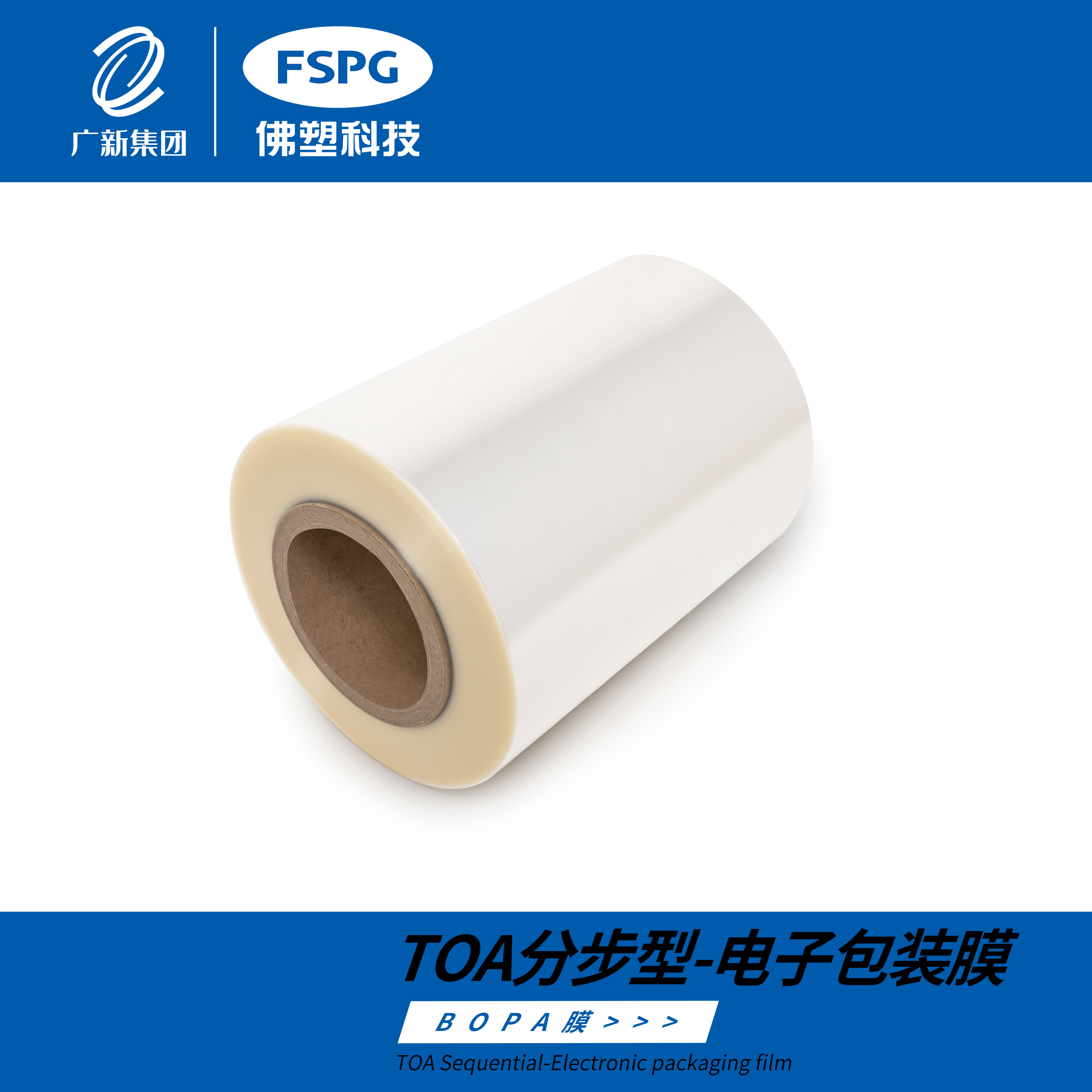
In the sequential stretching process, the film is stretched in the Machine Direction (MD) first, followed by the Transverse Direction (TD). This method is standard across many manufacturing facilities. However, it results in higher anisotropy within the film structure. You will observe residual thermal shrinkage variance between the MD and TD. This variance increases the risk of bowing or curling, particularly when used in asymmetric lamination structures where the tension of the PE or CPP layer pulls against the nylon.
The simultaneous stretching process stretches the film in both the MD and TD concurrently. This advanced method yields highly isotropic physical properties. The thermal shrinkage remains balanced across all directions. Consequently, the film provides superior dimensional stability during post-lamination curing and high-heat sealing processes. This stability is vital for maintaining flat, aesthetically pleasing pouches that run cleanly through automated cartoning equipment.
Choosing the right stretching profile directly impacts converting efficiency. Utilizing simultaneous-stretched material significantly reduces registration errors during high-speed printing. It ensures the web remains flat and predictable as it moves through laminators and form-fill-seal equipment. Matching the film's orientation to the structural demands minimizes waste and maximizes production throughput.
Two-ply structures typically consist of an outer layer (usually 15µm) laminated to an inner Polyethylene (PE) or Cast Polypropylene (CPP) sealant layer ranging from 50 to 120µm. The outer layer provides essential physical durability and a strong gas barrier. The inner PE or CPP layer delivers the hermetic seal, acts as a moisture barrier, and dampens impact forces. These structures work best for standard vacuum pouches, frozen food packaging, and bulk liquid liners.
Three-ply structures add an outer protective layer, usually Polyester (PET) at 12µm, over a middle 15µm nylon layer, finished with an inner PE or CPP sealant. The PET provides high-gloss printability and thermal resistance against hot sealing jaws. Crucially, it acts as a primary external moisture barrier, protecting the hygroscopic middle layer. The middle layer contributes drop-impact strength and an oxygen barrier. These combinations are best for high-end printed stand-up pouches, retort packaging (using CPP), and heavy-duty pet food bags.
Structure Type | Layer Composition | Primary Function | Ideal Application |
|---|---|---|---|
Two-Ply | BOPA / PE | Puncture resistance, basic moisture barrier, strong seal | Frozen foods, vacuum-packed meats |
Three-Ply | PET / BOPA / PE | High heat resistance, superior printability, protected nylon core | Stand-up pouches, liquid spouted pouches |
Retort Three-Ply | PET / BOPA / CPP | High-temperature stability, sterilization resistance | Ready-to-eat meals, wet pet food |
Foil Four-Ply | PET / AL / BOPA / CPP | Absolute barrier, extreme puncture protection | Military rations, aggressive chemical packaging |
For extreme barrier requirements, structures incorporate Aluminum Foil (AL), EVOH co-extrusions, or barrier-coated substrates like PVDC-coated or vacuum-metallized films. These complex structures combine the absolute moisture and oxygen barrier of metal or specialized polymers with extreme puncture resistance. Placing nylon adjacent to aluminum foil prevents pinholing in the metal layer during aggressive handling. These robust structures are best for military rations, highly acidic or oily food products, and long-shelf-life pharmaceutical packaging.
Frozen packaging must withstand deep freezes without becoming brittle. It must also survive the intense vacuum-draw process over sharp edges, such as bone-in meats or frozen shellfish. The recommended approach utilizes a two-ply structure integrating metallocene LLDPE (mPE). The mPE enhances hot-tack and seal strength, ensuring the package remains sealed even if food contaminants enter the seal area during filling. You need a sealant that flows around particulates.
Retort applications demand absolute resistance to delamination and shrinkage during high-heat, high-pressure sterilization. Temperatures typically range from 121°C to 135°C. The recommended approach is a three-ply PET/Nylon/Retort-grade CPP structure. You must use high-performance aliphatic polyurethane adhesives capable of withstanding these extreme retort temperatures without degrading. Standard adhesives will turn to mush in the autoclave.
MAP requires maintaining internal gas concentrations (CO2/N2) while preventing moisture vapor loss over extended display cycles. The recommended approach involves structures like PET/Nylon/EVOH/PE or PVDC-coated variations. These combinations achieve ultra-low OTR, ensuring the modified atmosphere remains stable even in high-humidity retail display cases. If the oxygen barrier fails, the meat oxidizes and turns brown before the sell-by date.
Bulk liquid packaging faces severe hydraulic shock during transportation, vibration, and drop impacts. The evaluation dimension focuses on distributing kinetic energy evenly across the pouch body. Symmetrical or reinforced structures, such as a double nylon layer laminated to PE, provide the necessary tensile strength to prevent catastrophic bursts during transit. A 5-liter liquid pouch dropped from 3 feet generates massive hydraulic pressure on the bottom gusset seals.
Packaging engineers must analyze the financial impact of their structural choices. Specifying a three-ply PET-based structure when a two-ply structure meets the success criteria leads to unnecessary expenses. For short-shelf-life products that do not require extensive moisture protection or high-heat sealing, a simpler two-ply design provides optimal value without over-engineering the solution. Keep the structure as lean as the distribution cycle allows.
Integrating nylon affects the coefficient of friction (COF) on packaging lines. High COF can cause web jamming and slow down form-fill-seal machinery. Proper tension control during lamination is vital to prevent web curling, which disrupts automated filling processes. Understanding these converting realities ensures the chosen structure performs efficiently on the production floor. You have to match the slip additives in the sealant web to the metal forming collars on the packaging machine.
Multi-material flexible packaging structures present significant end-of-life recycling challenges. The industry faces a trade-off between downgauging and mono-material design. Using thinner, stronger nylon reduces the total plastic volume, lowering the carbon footprint during transport. However, this conflicts with the industry push for mono-material PE structures designed for easier mechanical recyclability. Packaging designers must weigh material reduction against end-of-life recovery goals.
Nylon rapidly absorbs ambient humidity. This absorption leads to film elongation, loss of barrier properties, and severe registration issues during printing. To mitigate this risk, converting facilities must maintain strict climate control.
Keep relative humidity below 50% in the printing and lamination halls.
Utilize PET as an outer protective layer to shield the core material from ambient moisture.
Implement rapid processing schedules to minimize the time the bare film is exposed to the air.
Apply immediate moisture-proof wrapping to all finished rolls before moving them to the warehouse.
Mismatched surface tensions, differing thermal shrinkage coefficients, or improper adhesive curing cause multi-layer structures to curl. Curling severely disrupts form-fill-seal machinery. Mitigation requires precise tension matching between webs during the lamination process. Utilizing simultaneous-stretched film helps balance thermal shrinkage. Furthermore, selecting adhesives with appropriate cross-linking times ensures a stable, flat web. You need to let the rolls cure fully in a hot room before slitting.
Aggressive ingredients like spices, essential oils, or acidic sauces can migrate through the sealant layer. This migration degrades the adhesive bond, leading to delamination. To mitigate this, transition from standard solventless adhesives to high-chemical-resistance solvent-based systems. Specialized aliphatic solventless systems also provide robust resistance. Always base adhesive selection on rigorous product compatibility testing. Run a 30-day accelerated aging test at 40°C to verify bond strength.
The optimal lamination structure is dictated by the product's physical demands, thermal processing requirements, and shelf-life targets. Success requires precise alignment between material properties and application hazards.
Initiate compatibility testing with your specific product formulations to verify adhesive and sealant performance.
Request technical data sheets for specific grades to compare simultaneous versus sequential stretching profiles for your application.
Conduct pilot runs on production form-fill-seal equipment to validate machinability, COF, and seal integrity.
Audit your converting facility's climate control systems to ensure humidity remains below 50% during processing.
A: Biaxially oriented polyamide offers superior puncture resistance, flex-crack durability, and gas barrier properties, making it ideal for high-stress applications. BOPP (Biaxially Oriented Polypropylene) provides an exceptional moisture barrier and lower raw material costs, but lacks the extreme mechanical strength required for heavy-duty or sharp-edged packaging.
A: PET acts as a crucial moisture barrier, protecting the highly hygroscopic nylon layer from ambient humidity. Additionally, PET provides excellent heat resistance against sealing jaws during pouch formation and offers a superior, high-gloss surface for high-quality printing.
A: Sequential stretching (MD then TD) can create thermal shrinkage variance, increasing the risk of web curling. Simultaneous stretching (MD and TD together) produces highly isotropic properties, ensuring balanced thermal shrinkage and superior dimensional stability, which is critical for flat, high-speed automated packaging.
A: No. It lacks inherent heat sealability. To form a functional pouch or package, it must be laminated to a heat-sealable web, such as Polyethylene (PE) or Cast Polypropylene (CPP), which also provides necessary moisture resistance.
A: Retort packaging requires high-performance aliphatic polyurethane adhesives. Standard adhesives will degrade and cause delamination under the extreme heat (121°C to 135°C) and high pressure of the sterilization process.