Views: 0 Author: Site Editor Publish Time: 2026-06-29 Origin: Site
Packaging engineers face a constant dilemma when designing high-performance flexible packaging. They must balance extreme puncture resistance, rigorous gas barrier requirements, and converting efficiency without over-engineering the final structure. Standard commodity films often fail catastrophically under severe stress. Extreme conditions like deep freezing, thermal retorting, or vacuum packing easily overwhelm basic substrates. When these materials crack or tear, brands suffer massive product loss. Shelf life drops instantly. Brand reputation takes a heavy hit.
This article explores how BOPA FILM serves as the specialized solution for these demanding environments. You will learn about its core technical properties and the realities of its manufacturing process. We also break down the evaluation criteria necessary for R&D and procurement teams to make informed sourcing decisions. Understanding these factors helps you optimize your packaging performance effectively.
Definition: BOPA (biaxially oriented polyamide film) is a premium flexible packaging substrate prized for exceptional tensile strength, flex-crack resistance, and oxygen barrier capabilities.
Manufacturing: Quality relies heavily on the orientation process (simultaneous vs. sequential stretching), which directly dictates the film's isotropic properties and dimensional stability.
Evaluation: BOPA is overkill for basic moisture barriers but essential for retort pouches, medical packaging, and deep-freeze applications.
Implementation Risk: Due to polyamide's hydrophilic nature, strict moisture management during storage, printing, and lamination is critical to prevent curling or delamination.
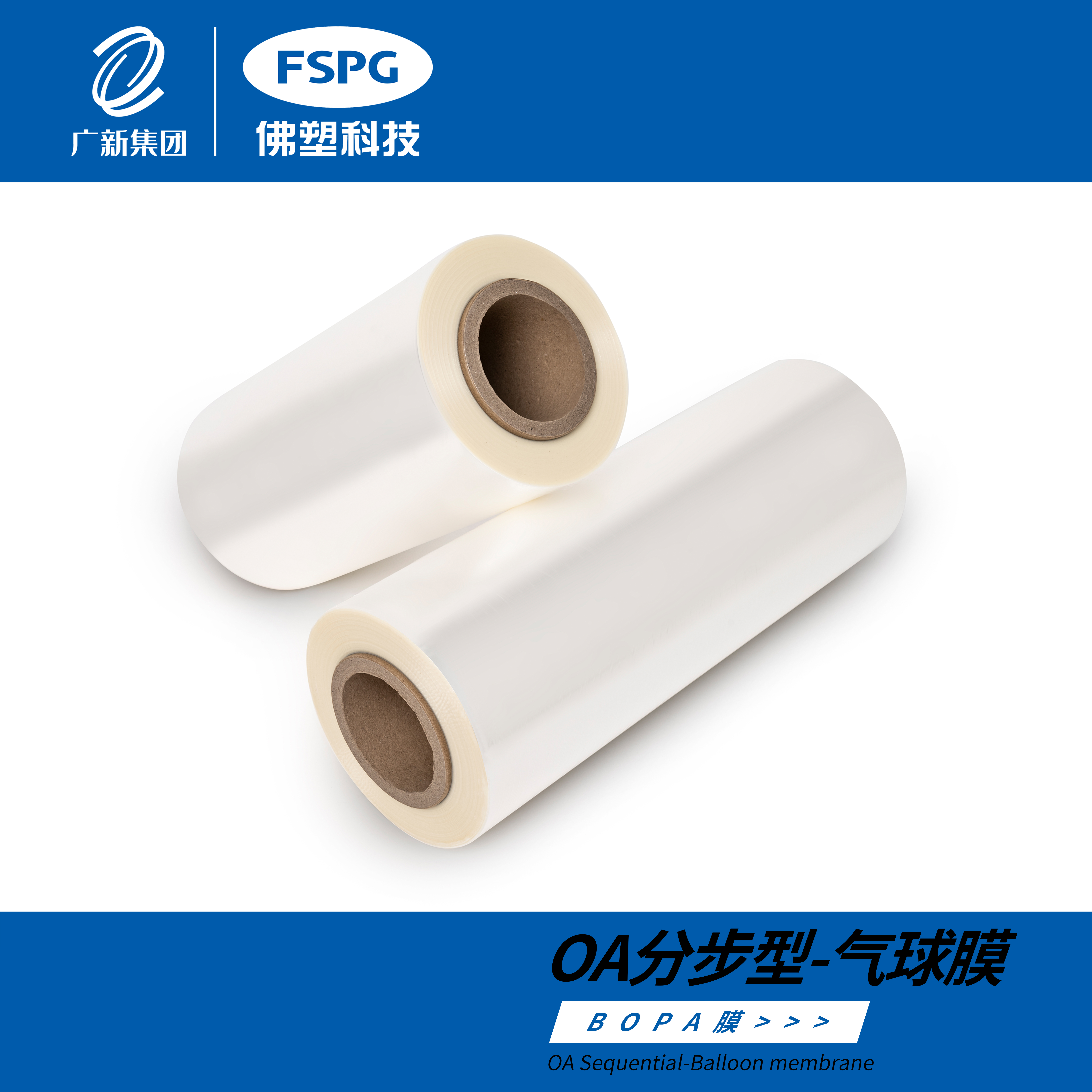
Industry professionals widely recognize biaxially oriented polyamide film as the standard "Nylon film" in flexible packaging. It represents a class of high-performance polymer substrates. Manufacturers create it by stretching polyamide resin in two perpendicular directions. This dual stretching aligns the polymer chains tightly. The resulting material boasts extraordinary mechanical toughness. It handles intense physical abuse far better than standard polyolefins.
Procurement engineers rely on specific baseline performance metrics to justify the use of this premium material. These metrics dictate packaging success in harsh environments:
Superior puncture and pinhole resistance: Sharp edges easily pierce standard films. Nylon film stops this. It proves critical for packaging bone-in meats, dried pastas, or sharp industrial components.
High oxygen and aroma barrier: Oxygen degrades food rapidly. This material blocks oxygen transmission remarkably well. It locks in volatile aromas. This preserves long-term shelf life for premium goods.
Broad temperature tolerance: Packaging often undergoes severe temperature swings. You might boil it, retort it at 121°C, or plunge it into a deep freeze. Nylon maintains its structural integrity across these extremes.
We must acknowledge price dynamics frankly. This film carries a noticeable price premium over standard BOPP or BOPET alternatives. Buyers cannot justify it for simple, fast-moving consumer goods requiring basic dust covers. Its return on investment strictly materializes in high-failure-risk packaging formats. If a package rupture costs you a high-value medical device, the premium price becomes negligible. You pay for absolute reliability. You pay for the guarantee against catastrophic package failure.
Creating this advanced substrate requires precise engineering. The process transforms raw resin into a highly oriented, dimensionally stable web. Understanding this process helps buyers evaluate supplier capabilities better.
The journey begins in the extrusion phase. Manufacturers feed high-grade polyamide 6 (PA6) resin pellets into a heated extruder. The extruder melts the PA6 resin into a viscous polymer melt. A specialized flat die extrudes this melt onto massive chill rolls. These rolls rapidly quench the polymer. This rapid cooling creates a thick, amorphous base sheet. At this stage, resin purity plays a massive role. Impurities or degraded gels in the melt will severely ruin the final optical clarity. High-purity resin ensures a crystal-clear finished product.
Stretching the amorphous sheet gives the film its strength. Manufacturers use two primary methods to achieve this biaxial orientation. The method chosen drastically affects the final quality.
Sequential Stretching: The production line first stretches the film in the machine direction (MD) using heated rollers. Next, a tenter frame stretches it in the transverse direction (TD). This traditional method remains highly cost-effective. However, it can result in "bowing." It sometimes yields uneven physical properties near the edges of the web.
Simultaneous Stretching (LISIM/Tenter): Advanced lines stretch the film in both MD and TD concurrently. Linear motors often drive the clips holding the film edges. We must emphasize this method's superiority. It yields excellent isotropic properties. It produces better flatness and higher dimensional stability. R&D buyers actively evaluate these traits when approving vendors for demanding applications.
After stretching, the film holds immense internal stress. If left alone, it would shrink violently when exposed to heat. The annealing phase solves this. The tenter frame carries the stretched film through a heated oven. This controlled heating locks the molecular structure into place. Heat setting prevents severe shrinkage during the end-user's thermal processing. Retort sterilization relies heavily on this dimensional stability.
You should evaluate suppliers stringently. Look beyond the basic spec sheet. Assess their inline gauge control systems. Consistent thickness prevents weak spots. Monitor their web tension consistency during winding. Poor tension causes severe wrinkling. Finally, check their corona treatment longevity. The film requires corona treatment to accept inks and adhesives. Ask suppliers how long they guarantee the dyne level before it decays naturally.
Choosing the right substrate confuses many buyers. The industry commonly uses three "Biaxially Oriented" films. Each serves distinct purposes. Comparing them clarifies when to utilize BOPA FILM.
BOPP dominates the snack food aisle. It offers a superior moisture barrier. It keeps potato chips crisp. It also boasts a significantly lower cost. However, BOPP fails under certain stresses. Nylon offers vastly superior oxygen barrier properties. It provides exponentially better puncture resistance. It also maintains flexibility in cold temperatures where BOPP turns brittle.
BOPET (Polyester) shines in stiffness. It features excellent heat resistance, making it ideal for high-speed printing presses. It also costs less than Nylon. Yet, BOPET struggles with extreme flexing. It pinholes very easily when folded repeatedly. Nylon provides unmatched flex-crack resistance. This makes it far better for liquid packaging, bag-in-box applications, and tight vacuum seals.
Use a straightforward logic framework to make material choices. We provide a simple comparison chart below to guide your decision-making process.
Application Requirement | Recommended Material | Primary Reason |
|---|---|---|
Strong moisture barrier & low cost | BOPP | Excellent water vapor transmission rate (WVTR) on a budget. |
High stiffness & heat resistance | BOPET | Maintains registration well on high-speed printing lines. |
Vacuum seals & sharp edges | BOPA | Superior puncture strength prevents bone-in meat blowouts. |
Liquid packaging & heavy flexing | BOPA | Unmatched flex-crack resistance stops liquid leaks. |
Deep freezing & thermal retorting | BOPA | Maintains integrity across massive temperature extremes. |
Understanding where this film excels helps you target the right markets. You must also understand its operational quirks to prevent manufacturing disasters down the line.
Several industries rely exclusively on this robust substrate.
Food & Beverage: It dominates the retort pouch market. You find it packaging ready-to-eat meals and pet food. It handles vacuum-packed meats perfectly. It wraps heavy cheese blocks. It forms the resilient inner bladders for bag-in-box liquids.
Medical & Pharmaceutical: Medical device packaging requires absolute sterility. The film withstands sterilization processes easily. However, medical applications demand strict regulatory compliance and absolute traceability from the manufacturer.
Industrial: It wraps heavy-duty chemicals safely. Interestingly, it also serves as the primary material for large, floating helium balloons due to its excellent gas retention.
We must transparently discuss a major operational risk. Polyamide possesses a hydrophilic nature. It loves water. It absorbs moisture directly from the ambient environment rapidly. This moisture absorption alters the film's dimensions. It causes severe curling, wrinkling, and loss of print registration.
You must implement strict mitigations to survive this challenge. Suppliers must ship the rolls wrapped securely in moisture-proof aluminum foil barrier packaging. Never leave an unwrapped roll sitting on the factory floor. You must maintain strict humidity control inside your printing facility. Experts recommend keeping relative humidity firmly around 50%. Finally, execute prompt lamination immediately post-unwrapping. Do not let printed rolls sit exposed for days before lamination. Delaying lamination invites severe dimensional distortion.
Best Practices for Implementation: Always condition the film to the printing room's temperature for 24 hours before removing the foil wrapper. This prevents condensation from forming on the cold roll.
Sourcing this material requires deeper diligence than buying standard commodities. R&D and procurement teams must interrogate potential suppliers on several technical fronts.
You must ask if a supplier utilizes sequential or simultaneous stretching lines. Your exact tolerance requirements dictate this need. If you produce highly demanding retort pouches requiring perfect isotropic flatness, seek out simultaneous (LISIM) lines. If your application handles simple vacuum packing, high-quality sequential lines often suffice and save money.
Never assume compliance. Demand up-to-date documentation. For food-contact applications, you need FDA and EFSA certificates. Medical-grade validity requires specific ISO certifications regarding cleanroom manufacturing and material safety. A trustworthy manufacturer provides these technical data sheets (TDS) and compliance certificates instantly upon request.
Ink adhesion dictates package aesthetics. Corona treatment creates the surface energy needed for adhesion. You must evaluate the supplier's consistency in achieving uniform dyne levels across the entire web. Ask them how long they guarantee treatment viability before it decays. A reputable supplier will clearly state the shelf life of their corona treatment. They will advise you on the necessary re-treatment protocols if you store the film too long.
Assess their commercial flexibility. What are their Minimum Order Quantities (MOQs)? Small trial runs require low MOQs. Understand their standard lead times. Furthermore, check their ability to provide customized gauges. The industry relies heavily on 15µm thicknesses. However, you might need a thin 10µm gauge for lamination or a thick 25µm gauge for heavy industrial bags. Ensure your partner can scale with your specialized demands.
Evaluation Metric | What to Look For | Common Mistake to Avoid |
|---|---|---|
Orientation Method | Simultaneous for high isotropic needs; Sequential for standard uses. | Ignoring bowing effects on wide webs from sequential lines. |
Corona Treatment | Guarantee of dyne level (e.g., >50 dynes) for at least 3-6 months. | Buying old stock with decayed surface energy, causing ink failure. |
Packaging | Rolls suspended and wrapped in heavy aluminum foil barrier. | Accepting rolls wrapped only in basic stretch film. |
This advanced packaging substrate plays a highly strategic role in modern manufacturing. It actively eliminates package failure rates in the most high-stress applications imaginable. You cannot replace it with cheaper polyolefins when dealing with bone-in meats, deep freezes, or thermal retorting. The cost of package failure vastly outweighs the material's premium price.
We acknowledge it requires precise handling during converting. You must respect its hydrophilic nature. You must control your plant's humidity. Yet, when handled correctly, its performance in physical durability and gas barrier protection remains entirely unmatched in the flexible packaging sector.
Next-Step Action: Evaluate your current package failure rates. Identify any puncture or barrier issues.
Next-Step Action: Contact reputable manufacturers to request technical data sheets (TDS).
Next-Step Action: Order sample rolls packaged in foil to conduct localized line trials within your own controlled printing environment.
A: True recycling remains challenging. Flexible packaging usually features multi-layer laminations mixing Nylon with Polyethylene. Current recycling streams struggle to separate these mixed plastics. While the industry pushes toward mono-material structures, Nylon's extreme performance remains hard to replicate. Chemical recycling advancements show promise for processing these complex multi-layer structures in the future.
A: Polyamide absorbs moisture rapidly from the air. High humidity causes the film edges to swell and stretch. This dimensional change leads to severe wrinkling on the press. It also causes a total loss of color registration during multi-color printing. You must control plant humidity closely.
A: The typical commercial range falls between 10 and 25 microns. The 15-micron gauge serves as the universal industry baseline for most standard food and vacuum packaging applications. Thinner gauges work well for lightweight laminations, while 25-micron films tackle heavy-duty industrial needs.
A: Yes, it can. Manufacturers produce standard and high-barrier Metallized BOPA (often labeled BOPA-M). The vacuum metallization process deposits a microscopic layer of aluminum onto the film. This exponentially enhances its oxygen, moisture, and light barrier properties for highly sensitive products.