Views: 0 Author: Site Editor Publish Time: 2026-07-01 Origin: Site
Packaging failures silently erode profit margins across global supply chains today. Product spoilage, severe transit damage, and compromised shelf-life create massive logistical headaches for brands. You cannot afford sub-standard protection when shipping aggressive goods. Balancing high-barrier performance against essential flexibility often frustrates packaging engineers. Standard flexible substrates frequently crack, puncture, or deform under severe physical stress. This exposes sensitive contents to oxygen and premature degradation. Material selection dictates product survival. Engineers must navigate complex variables during development. They evaluate tensile strength, gas resistance, and converting compatibility. Making the wrong choice leads to catastrophic market failures. You need reliable data to make informed procurement decisions. We provide a clear, engineering-focused breakdown of biaxially oriented polyamide. You will discover exactly where this material excels and where it requires secondary lamination layers. We will guide you through evaluating its core properties to solve your most demanding packaging applications.
BOPA film delivers exceptional puncture resistance and tensile strength, making it the industry standard for vacuum, liquid, and frozen food packaging.
While it offers a formidable oxygen and aroma barrier (OTR), its hygroscopic nature requires specific storage controls and often necessitates lamination for optimal moisture vapor transmission rate (WVTR) performance.
Flex-crack resistance ensures structural integrity across the supply chain, preventing micro-leaks during heavy physical handling.
Transitioning to nylon packaging film requires evaluating converting capabilities, specifically regarding tension control and moisture management during printing and lamination.
Relying on standard films for aggressive applications invites disaster. Bone-in meats easily pierce basic polyethylene bags. Liquid spouted pouches flex and crack during rough transit. Sharp-edged industrial goods shred conventional wrappers. These physical failures destroy consumer brand trust. They also generate massive product waste and trigger expensive returns. You need materials engineered specifically for extreme physical punishment. Standard substrates fail under continuous pressure. They cannot handle heavy drops or constant vehicular vibrations.
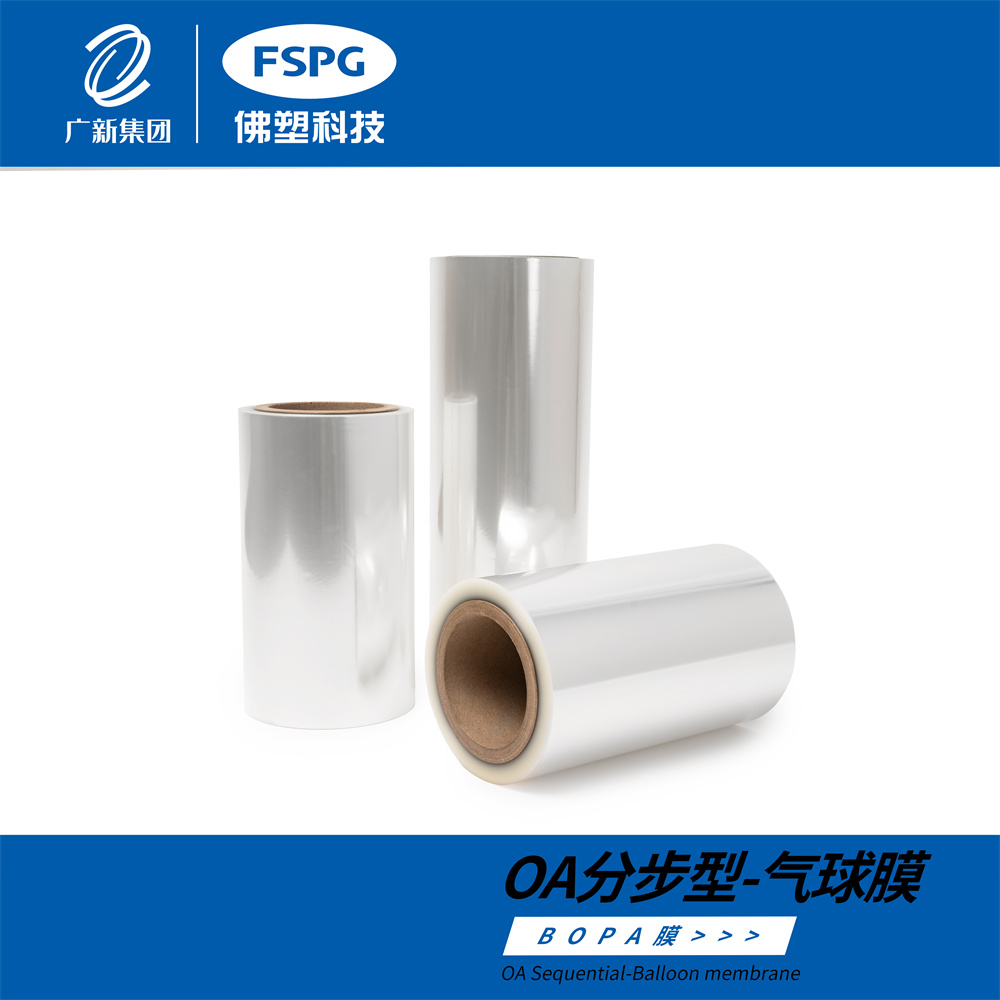
This brings us to BOPA FILM. Manufacturers create it by stretching polyamide resin in two perpendicular directions. This biaxial orientation process fundamentally alters the polymer molecular structure. It aligns the molecular chains tightly together. The result yields superior mechanical strength. You get enhanced barrier properties compared to basic cast films. The stretching process transforms raw nylon into a highly resilient shield. Engineers rely on this structural transformation for demanding jobs.
Packaging engineers must establish strict baseline metrics. You need to track impact survival rates during rigorous drop tests. You must set aggressive shelf-life extension targets for perishable items. Finally, focus on defect reduction during the converting process. These metrics dictate your ultimate packaging success. They help you validate your material choices moving forward.
Engineers measure tensile strength in both the machine direction (MD) and transverse direction (TD). Standard testing protocols quantify this internal force. The material exhibits massive tear resistance across both vectors. Dart drop impact tests measure sudden force absorption. High-quality nylon packaging film absorbs tremendous kinetic energy before rupturing. You want high impact numbers on your material spec sheets.
This incredible toughness prevents catastrophic packaging failures. Sharp contents like animal bones or dry pasta cannot easily pierce the pouch. The material aggressively resists abrasion during high-speed transit. Your products survive rough handling across complex logistics networks. High puncture resistance means fewer leakers in the retail freezer section.
Oxygen transmission rate (OTR) directly determines shelf life for sensitive foods. This material acts as a formidable barrier against oxygen ingress. It blocks volatile aroma compounds from escaping the package. You easily preserve complex product flavors. It actively prevents lipid oxidation in fatty foods. Coffee, cheese, and processed meats rely on this rigorous oxygen block.
We must address a crucial engineering reality here. Standard biaxially oriented polyamide is not a standalone moisture barrier. Polyamide naturally absorbs ambient moisture from the air. You must integrate it into a multi-layer laminated structure. Combining it alongside a polyethylene (PE) sealant layer achieves complete barrier profiles. This composite structure locks out moisture vapor while blocking oxygen. It delivers the best of both worlds.
Engineers rely on the Gelbo flex test to evaluate durability. The test repeatedly twists and crushes the material under mechanical pressure. It simulates severe physical abuse during actual transit. Polyamide consistently dominates these rigorous stress tests. It resists fracturing far longer than alternative packaging substrates.
Pinholing remains a critical failure point in liquid spouted pouches. Vacuum packs also suffer from micro-fractures under high tension. Polyamide elasticity absorbs this dynamic stress easily. It bends without fracturing the crucial barrier layer. You ensure structural integrity from the factory floor directly to the consumer.
Biaxially Oriented Polypropylene (BOPP) remains the cost-effective industry standard for many applications. It delivers an excellent moisture barrier. However, it fails in demanding physical scenarios. BOPP lacks high puncture resistance for sharp objects. It also becomes highly brittle during deep freezing operations. These physical limitations often justify upgrading to polyamide for aggressive applications. You use BOPP for dry snacks, not frozen meats.
Polyethylene Terephthalate (PET) offers excellent stiffness and superior heat resistance. Printers love PET for its high-fidelity graphic capabilities. Yet, PET shows significant vulnerability to flex-cracking. It cannot match the elasticity of polyamide in liquid packaging. Vacuum applications often expose PET weaknesses under heavy tension. The film can snap or form pinholes when severely creased.
Packaging Material Decision Matrix
Material Substrate | Puncture Resistance | Oxygen Barrier | Moisture Barrier | Flex-Crack Resistance | Optimal Application State |
|---|---|---|---|---|---|
BOPP | Low | Low | High | Medium | Dry / Ambient |
PET | Medium | Medium | Low | Low | Solid / Hot-Fill |
BOPA | High | High | Low (Needs Lamination) | High | Liquid / Frozen / Vacuum |
Implementation requires careful environmental management. Polyamide is highly hygroscopic by nature. It aggressively absorbs ambient moisture from the surrounding air. This rapid absorption causes dimensional instability. The master rolls may curl or warp before processing. Moisture also severely compromises adhesive bonds during lamination. Delamination destroys the entire packaging structure.
Converting facilities must implement strict standard operating procedures. You must store master rolls in climate-controlled environments. Always keep unused material tightly wrapped in high-barrier foil. Allow rolls to fully acclimate to the production floor temperature. Do this before opening the barrier wrapping. These simple protocols prevent catastrophic press-running issues.
Surface tension directly impacts print ink adhesion. You must verify corona treatment retention before running the printing press. Polyamide generally offers excellent printability. However, you must select appropriate polyurethane-based adhesives carefully. Multi-layer lamination requires adhesives engineered for high bond strength. Solventless and solvent-based systems both work well. Monitor the curing room temperatures closely.
Direct food contact applications demand strict regulatory compliance. You must verify adherence to FDA guidelines. European markets require EU migration standard compliance. Always request comprehensive migration testing documentation from your suppliers. Never assume compliance without certified laboratory results. This protects your brand from costly legal liabilities.
Buyers must demand specific non-negotiable data points when reviewing options. You need rigorous parameters to ensure production stability.
Verify strict thickness tolerances across the entire web. Inconsistent gauges cause poor roll winding.
Scrutinize shrinkage rates at specific processing temperatures. High thermal shrinkage distorts complex multi-layer laminates.
Check the coefficient of friction (COF). Consistent COF ensures smooth machinability on automated lines.
You must vet manufacturing partners carefully. Evaluate their specific orientation technology. Simultaneous stretching often yields better isotropic properties. Sequential stretching remains more common and highly effective. Investigate their quality control consistency. Request their standard defect resolution protocols. A reliable partner shares their testing data openly.
Never transition directly to full volume procurement. We strongly recommend a phased rollout strategy to mitigate operational risk.
Start with small pilot roll trials from your chosen supplier.
Test the machinability on your existing Form-Fill-Seal (FFS) equipment.
Monitor the sealing jaws and web tension controllers for inconsistencies.
Scale your purchase orders only after successful trial conversions.
Specifying high-performance film is a strategic business investment. It ensures supply chain survivability and total product integrity. Handling this material requires stricter environmental controls. However, the initial effort pays off through drastically reduced packaging failure rates. You eliminate leakers, spoilage, and customer complaints.
Your next steps involve careful material evaluation. First, consult a packaging material engineer regarding your specific use case. Second, request sample rolls to review specific OTR and WVTR application requirements. Third, map out your converting facility climate controls to prepare for hygroscopic substrates. Take action today to upgrade your packaging resilience.
A: Traditional recycling streams struggle with multi-material laminates. Polyamide is typically laminated to polyethylene to achieve moisture barriers. This combination is not readily recyclable in standard curbside programs. The industry is shifting toward mono-material structures. However, true high-barrier mono-materials are still evolving. You must maintain realistic expectations regarding current sustainability claims.
A: The standard thickness typically ranges from 10 to 25 microns. A 15-micron gauge serves as the industry standard for general food packaging. Thicker variations up to 25 microns handle aggressive industrial applications. You select the thickness based on specific puncture resistance requirements and overall package weight.
A: Sequential orientation stretches the film in the machine direction first, then the transverse direction. Simultaneous orientation stretches the polymer in both directions perfectly at the same time. Simultaneous technology generally produces better isotropic properties. It offers superior mechanical balance and more uniform dimensional stability across the entire web.
A: Standard grades cannot survive retort processes. You must specify specialized retort-grade versions. These high-heat films withstand temperatures exceeding 121°C during sterilization. They maintain structural integrity under high pressure. Always verify retort compatibility on the spec sheet before using the material for canned food alternatives.